September 16, 2026 Post by : Editorial Worldbuilding
Ale and Irony: Writing Humor Into Grim Fantasy Without Breaking the Mood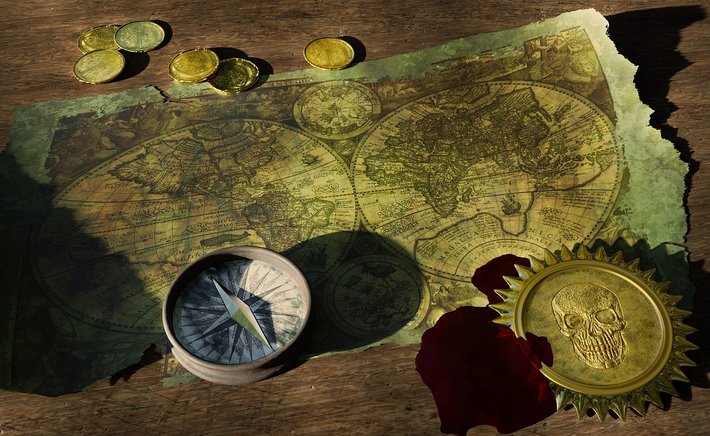
Every fantasy writer eventually draws a map. Coastlines, mountain ranges, a few suspiciously convenient rivers. It's a rite of passage. But here's the thing most of us get wrong: we draw the map the way a satellite would see it, not the way a medieval cartographer would have drawn it. And that's a missed opportunity.
Real medieval maps were lies. Not because the cartographers were incompetent, but because they were working from secondhand accounts, religious doctrine, political pressure, and the simple fact that nobody had actually been to most of the places they were drawing. Your fantasy map should be just as unreliable — and that unreliability is a storytelling goldmine.
Maps Are Arguments, Not Facts
When a king commissions a map, he's not asking for geography. He's asking for a document that says this is mine. Borders get pushed outward. Rival kingdoms get drawn smaller. That river that's been disputed for three generations gets placed firmly on one side.
Think about what that means for your story. A map in your hero's pack isn't neutral ground — it's someone's claim. Maybe the map was drawn by a rival kingdom's surveyor, and the "unclaimed" forest your characters are crossing is actually someone's ancestral hunting ground. Maybe the map marks a city that was destroyed fifty years ago, and the cartographer never got the memo.
When your characters trust a map, they're trusting the person who made it. That's a relationship, and relationships can be betrayed.
Let the Blank Spaces Do the Work
Medieval maps were full of monsters. Sea serpents, dog-headed men, cities of gold. Not because the cartographers were credulous, but because they were filling in gaps with the most interesting thing they'd heard. The blank spaces on a map are where the story lives.
So don't fill in every corner of your world. Leave a region marked here be dragons and then decide whether the dragons are real, metaphorical, or just a very large and unfriendly neighbor. Leave a trade route that vanishes into a mountain pass and never comes out the other side. Let your characters argue about what's out there.
The best part? You don't have to decide. The uncertainty is the point. Your hero can spend three chapters marching toward a city that may or may not exist, and the tension of that uncertainty will carry the reader further than any carefully plotted travelogue.
Draw your map. Then draw it again from the perspective of someone who's never been there, someone who's heard rumors, someone who has something to gain by lying. That second map is the one your characters should be using. The truth can stay hidden — for now.
Author

22 feb,2025
This incident opened my eyes to the value of Insurance in general, so I decided to examine my personal and business insurance.


Comment (3)
The payments are made directly from one person to another without passing through a central bank or clearing house.
22 feb,2025
ReplyGods With Bad PR: Writing Religions That Feel Lived-In
23 feb,2025
ReplyThe Villain's Sword Is Smarter Than Yours: Writing Antagonists Who Deserve Their Reputation
23 feb,2025
Reply